Save over 40% on newborn stem cell processing thru 10/31.* Save Now >
Cord Blood Awareness Month is an educational initiative launched by Cord Blood Registry (CBR) to raise awareness among healthcare providers and expectant families about the importance of preserving newborn stem cells found in cord blood and cord tissue. We've been celebrating each July for almost two decades, and we're still excited about these powerful little cells that may one day help protect your family’s future.*


The newborn stem cells found in your baby's cord blood and cord tissue are a powerful resource that is only available to collect when your baby is born. Preserving your baby's cord blood at delivery offers the peace of mind that these unique cells are available if they are ever needed, helping minimize any delays in treatment.1 Cord blood also offers more flexible genetic matching compared to adult stem cell sources, which may be especially important in stem cell transplants.2
By collecting and storing these stem cells at birth, you "stop the clock," helping preserve their powerful qualities for possible future use.3 High-quality collection and sample processing practices may help maximize the usefulness of your baby's sample, especially since a larger dose of stem cells is associated with improved medical outcomes.4
One of the most common questions expectant parents ask when researching cord blood banking is whether they have to choose between delaying cord clamping and preserving their baby's cord blood. The answer is that most families can do both — and a conversation with your care team is often all it takes to make sure the timing works.
Delaying cord clamping for approximately 30 to 60 seconds has not been shown to significantly reduce the cell count of the cord blood being collected.5 Longer delays may lower the available volume of cord blood, which is why early coordination with your provider matters. When you let your healthcare provider know that you plan to bank your baby's cord blood with CBR, your care team can build timing into the delivery plan so both priorities may be honored.
For many parents, understanding the process helps them make the decision to store their baby's newborn stem cells. From enrollment to storage confirmation, CBR is dedicated to making everything as easy as possible.

CBR ships a collection kit directly to your home before your due date.
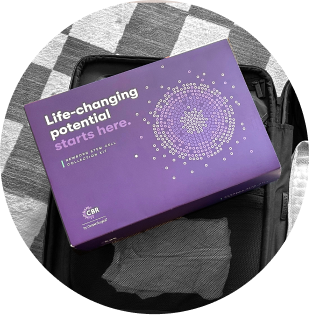
You pack the kit in your hospital bag alongside your other birth essentials.

At delivery, your care team collects cord blood and cord tissue immediately after your baby is born.

A medical courier transports your sample to CBR's laboratory in the temperature protected collection kit.

Our expert lab technicians use AXP® II processing (a fully automated system) to separate the stem cells from the cord blood. It has the highest reported average stem cell recovery rate in the industry.4
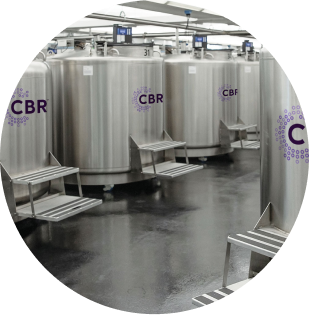
Your baby's cells are cryopreserved. You receive confirmation once they are safely stored.
Cord blood is a powerful source of stem cells with a proven track record in transplant medicine.6 These remarkable stem cells can be used to treat over 80 conditions, including certain cancers, blood and immune disorders, and metabolic diseases.7
For more than 30 years, cord blood has been used in stem cell transplants to help tens of thousands of people worldwide.6 In fact, over 50,000 stem cell transplants have been performed globally using cord blood from both public banks and private banks.8
Newborn stem cells know how to find injured cells and tissue and start the healing process, making them an appealing cell source for research.9 More than 500 clinical trials have been initiated to study cord blood and cord tissue in regenerative medicine.10 Cord blood has been evaluated in regenerative medicine for conditions such as hypoplastic left heart syndrome, type 1 diabetes, spinal cord injury, cerebral palsy, and hypoxic neurological injury.11
For example, Duke University has performed a number of studies evaluating the use of newborn stem cells as a potential treatment for acquired neurological conditions like cerebral palsy and hypoxic ischemic encephalopathy.9 Additionally, individuals with certain pediatric brain injuries may be eligible for off-study infusions of cord blood through Duke's Expanded Access Protocol.9
As you research cord blood banking, you will likely come across references to cord tissue preservation. These are two separate collections taken during the same brief window at birth, and the distinction matters for the decision you are making.
It contains hematopoietic stem cells with a decades-long history of use in transplant medicine -- the same cells used in treating more than 80 conditions.
The science around cord tissue is still developing, but many families choose to preserve it in order to keep future options open as research continues.
Because both can be collected together at birth in a single process, preserving both does not add complexity to your delivery. It simply expands what is available to your family down the road.
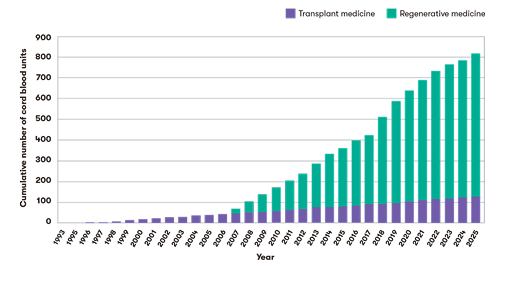
CBR has released more units intended for medical use than any other family bank, with over 800 samples provided to CBR families for transplant medicine and regulated experimental regenerative medicine applications.12
For many parents, the decision to preserve newborn stem cells reflects thoughtful consideration and a personal story, but all share a common thread: doing everything possible to protect what matters most.
Catherine W., CBR mom
Shelby H., CBR mom
The CBR® Newborn Possibilities Program® offers processing and five years of storage at no cost to families with certain medical needs. Twenty-five percent of the samples we have released to date were for families who originally banked their samples under this program.12 With this program, CBR is helping to expand access to potentially life-changing stem cell therapies for those who may need them the most and may otherwise not have access.
Since 1992, families have entrusted CBR to store more than one million cord blood and cord tissue samples. As the largest and most experienced family newborn stem cell company in the United States, we are the #1 choice of parents and the #1 recommendation of the OB/GYNs who guide them through pregnancy.12
Advanced technology and decades of experience are at the heart of newborn stem cell preservation at CBR. In our state-of-the-art lab in Tucson, Arizona, each cord blood sample undergoes processing with the AXP® II platform, which is a functionally closed, automated processing method. Having a functionally closed processing method helps reduce the risk of contamination and automation helps to maintain consistency.13 For added peace of mind, every sample is checked to determine whether it meets important quality standards.
Choosing to bank your baby's cord blood can feel like one small step with significant possibilities for your family's future. It's a once-in-a-lifetime chance to prepare for unexpected moments. By partnering with CBR, you're choosing a leader in newborn stem cell preservation, trusted by parents and healthcare professionals nationwide.
It's one moment, one choice, and a lifetime of possibilities.

1. Kindwall-Keller TL, Ballen KK. Umbilical cord blood: The promise and the uncertainty. Stem Cells Transl Med. 2020;9(10):1153-1162. doi:10.1002/sctm.19-0288
2. Ballen K. Update on umbilical cord blood transplantation. F1000Res. 2017. 6:1556. doi:10.12688/f1000research.11952.1.
3. Jang TH, Park SC, Yang JH, et al. Cryopreservation and its clinical applications. Integr Med Res. 2017. 6(1):12-18. Scaradavou A et al. Blood. 2008. 112:1969.
4. Rosenthal J, Brown HL, Harris DT. Stem cell recovery following implementation of an automated cord blood processing system. Biol Blood Marrow Transplant. 2008. 14(2):42S.
5. Ciubotariu R, Scaradavou A, Ciubotariu I, et al. Impact of delayed umbilical cord clamping on public cord blood donations: can we help future patients and benefit infant donors?. Transfusion. 2018;58(6):1427-1433. doi:10.1111/trf.14574
6. Mayani H, Wagner JE, Broxmeyer HE. Cord blood research, banking, and transplantation. Bone Marrow Transplant. 2020. 55:48-61.
7. Zhu X, Tang B, Sun Z. Umbilical cord blood transplantation: Still growing and improving. Stem Cells Transl Med. 2021. 10 Suppl 2:S62-S74.
8. Mayani H. Cellular Therapies: Yesterday, Today, and Tomorrow. Stem Cells Dev. 2023. 32(7-8):163-169.
9. McLaughlin C, West T, Hollowell R, et al. Expanded Access Protocol of Umbilical Cord Blood Infusion for Children with Neurological Conditions. Stem Cells Transl Med. 2021. 10(S1):S7-S8.
10. Expanded Access Protocol: Umbilical Cord Blood Infusions for Children With Brain Injuries. ClinicalTrials.gov. NCT03327467. Accessed May 28, 2025.
11. Torre P, Flores AI. Current Status and Future Prospects of Perinatal Stem Cells. Genes (Basel). 2020. 12(1):6.
12. Internal data on file.
13. Rosenthal J, Brown HL, Harris DT. Stem cell recovery following implementation of an automated cord blood processing system in a high volume laboratory. Biol Blood Marrow Transplant. 2008;14(2):42s
14. Broxmeyer HE et al. Insights into highly engraftable hematopoietic cells from 27-year cryopreserved umbilical cord blood. Cell Rep Med. 2023. 101259.